
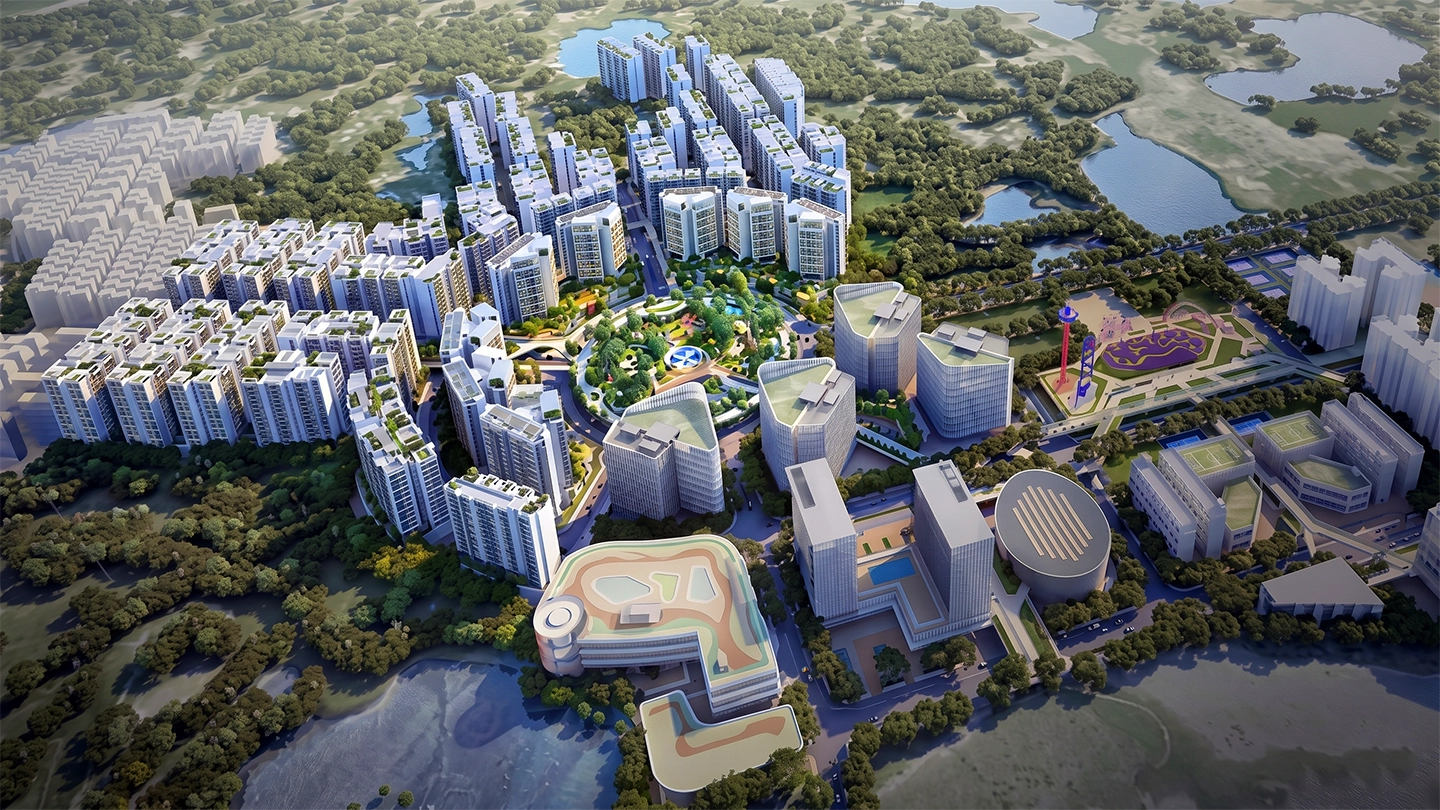
This consultation was conducted for the Trust Green City Gas Supply System Development Project. The Institute of Water Modelling (IWM) was entrusted with the overall responsibility for the planning and design of the project’s utility infrastructure, including the electrical, water, and gas supply systems.
Our scope of work focused specifically on the Gas Supply System. The project report was prepared in accordance with the applicable codes and standards under the supervision of Engr. Kamal Hossain, FIEB (F-10023). The gas supply system design, technical documentation, and drafting were carried out by Engr. Didar Mia.
Executive Summary:
Trust Green City (TGC) is a visionary township project developed by the Army Welfare Trust (AWT) of the Bangladesh Army, aimed at establishing a smart, sustainable, and eco-friendly urban community. The project is located on approximately 388 bighas of land in the Baunia area of Dhaka and is planned to integrate modern infrastructure, advanced technology, and green urban design to ensure a high quality of life for its residents.
As part of its integrated utility infrastructure, Trust Green City requires a safe, reliable, and efficient gas distribution system to serve residential, commercial, and institutional users. Since new natural gas connections are currently unavailable, the project has adopted a centralized LPG reticulation (piped LPG) system as its primary energy solution.
The proposed LPG reticulation system connects all end users to a centralized supply source through a fully underground pipeline network, eliminating the conventional use of individual LPG cylinders. This approach ensures uninterrupted gas supply, removes the need for in-home cylinder storage, eliminates manual handling risks, improves fire safety, and enhances user convenience. Consumers pay only for actual gas consumption through a transparent and regulated billing mechanism.
The system is designed with a long-term planning horizon, addressing projected energy demand up to the year 2050. The core scope includes a centralized LPG storage and handling facility equipped with bulk storage tanks (e.g., four units of 47–49.5 m³ capacity) and high-capacity vaporizers to convert liquid LPG into gas. A looped underground pipeline network of approximately 15,613 meters is designed to maintain stable pressure and reliable supply across five distribution zones.
To enhance operational efficiency and consumer control, the project incorporates a smart prepayment gas metering system featuring real-time consumption monitoring, automated billing on a “Pay-as-You-Go” basis, automatic leak detection with emergency shut-off valves, and seismic safety protection activated during earthquakes exceeding magnitude 4. An SNG (Synthetic Natural Gas) system is also included, allowing LPG-air blending to simulate natural gas properties and ensure future operational flexibility.
Safety and technical integrity are central to the design philosophy. All components—including storage tanks, pipelines, valves, and fittings—comply with NFPA 58, BNBC 2020, and the Bangladesh LPG Rules, 2004. Underground pipelines are constructed using API 5L Grade B; All underground LPG pipelines transmitting liquid or vapor LPG from the terminal to the township network shall be designed in accordance with ASME B31.8.
The system is future-ready, allowing conversion from LPG to natural gas with minimal infrastructure modification should Titas Gas become available. Engineering design and system modeling are validated by the Institute of Water Modelling (IWM), ensuring accuracy, safety, and operational reliability.
The Smart Utility (LPG) System for Trust Green City represents a modern, secure, and sustainable urban energy solution, setting a new benchmark for township gas utilities in Bangladesh while aligning with the long-term development vision of the Bangladesh Army and Army Welfare Trust.
Objective
The main objective of this assignment is to develop a Smart Utility (Gas) System for Trust Green City (TGC), including the development of LP Gas centralized underground bulk storage facilities, underground pipeline network, and smart metering infrastructure with full safety compliance.
Trust Green City is a developing project committed to maintaining excellence and meeting the evolving needs of its customers. As part of this vision, TGC intends to establish a smart gas utility service through the development of LP Gas storage and handling facilities, an underground reticulated pipeline network, and a prepayment smart metering system.
The system shall be designed to demonstrate a complete solution covering design, construction, operation, and management of the LPG storage and distribution facility, ensuring uninterrupted gas supply and one-stop service support to all users.
Specific Objectives
- Development of Centralized LPG Storage Facility
- Develop a centralized underground bulk LPG storage facility.
- Ensure uninterrupted 24/7 gas supply to the entire project area.
- Uninterrupted Supply to Residential and Commercial Units
- Provide continuous LPG supply to all residential and commercial units.
- Eliminate the need for cylinder replacement, delivery waiting time, and manual cylinder handling.
- Smart Metered Billing System
- Establish a smart prepayment metering system for real-time monitoring and automated billing.
- Enable online payment gateway integration.
- Ensure customers pay strictly according to the pricing declared by the Bangladesh Energy Regulatory Commission (BERC).
- Integrated Safety and Emergency System
- Integrate leak detection systems and emergency shutdown mechanisms.
- Ensure safety measures for LPG storage facilities and underground pipeline networks.
- Regulatory and International Compliance
- Ensure compliance with:
- EN 13345 / ASME Section VIII Division 2 (for LPG tanks)NFPA 58 (for LPG storage and reticulated systems)
- Follow all applicable local regulatory requirements.
- Ensure compliance with:
- Survey, Design, and Demand Assessment
- Conduct survey and data collection.
- Analyze gas demand for TGC.Assess suitable locations for LPG storage facilities.Develop detailed gas distribution area design.
- Estimate gas demand for individual buildings and provide smart metering facilities.
- BOQ and Cost Estimation
- Prepare detailed Bill of Quantities (BOQ).
- Develop cost estimation for implementation.
- Sustainable Utility Management
- Develop smart supply chain management for LPG procurement from different LPG operators.
- Enable centralized utility management for long-term operational sustainability.
Expected User Benefits
The Smart Gas Utility System will provide the following advantages to end users:
- Uninterrupted LPG supply
- No need to order or replace cylinders
- No waiting for LPG delivery
- No delivery personnel entering homes
- No cylinder handling or flooring damage
- No residual gas loss
- Pay only for actual consumption at BERC-declared price
The Project Overview
The proposed LP Gas Storage and Handling Facility for Trust Green City (TGC) will be located at Road number 7 , Sector 3 ( Adjacent to the STP Plant) of the township and will function as a Centralized Gas Supply Facility for the entire development. The facility will require approximately 25 kathas of land and is designed to ensure safe, reliable, and uninterrupted LPG supply in compliance with internationally recognized safety standards.
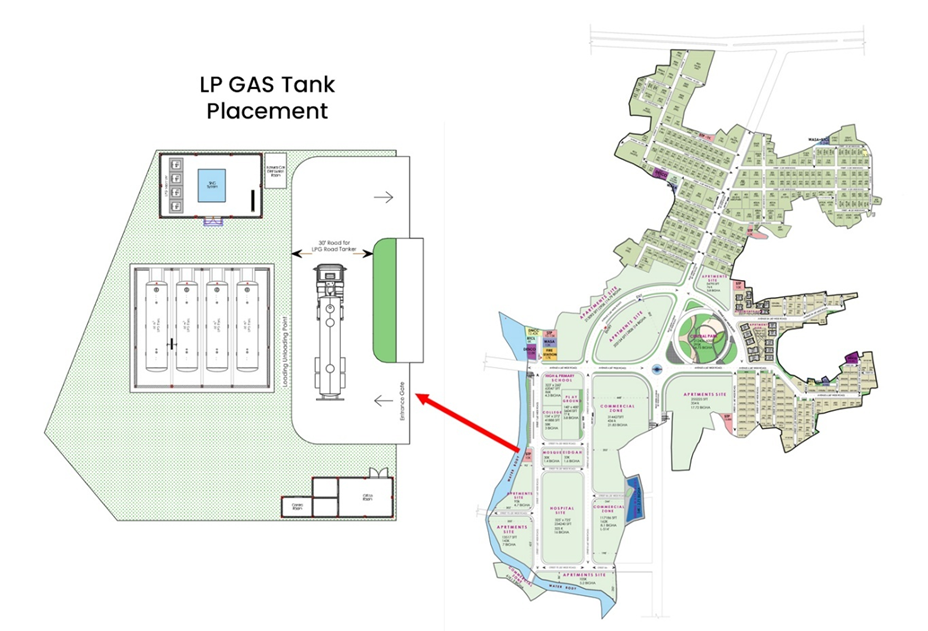
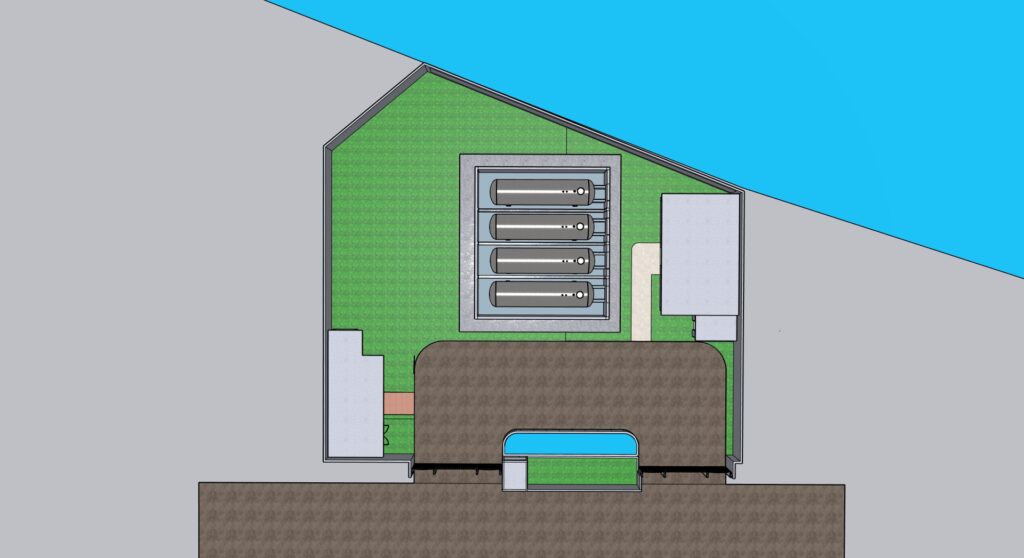
The centralized facility will comprise four (4) LPG bulk storage tanks, five (5) nos 500 Kg/hour, capacity vaporizers, LPG pumping systems, an LPG unloading bay for road tankers, a comprehensive gas leak detection system, and a fully integrated Emergency Shutdown System (ESD). All safety systems, spacing, firefighting equipment, and operational safeguards will be provided in accordance with NFPA 58 and applicable local regulations.
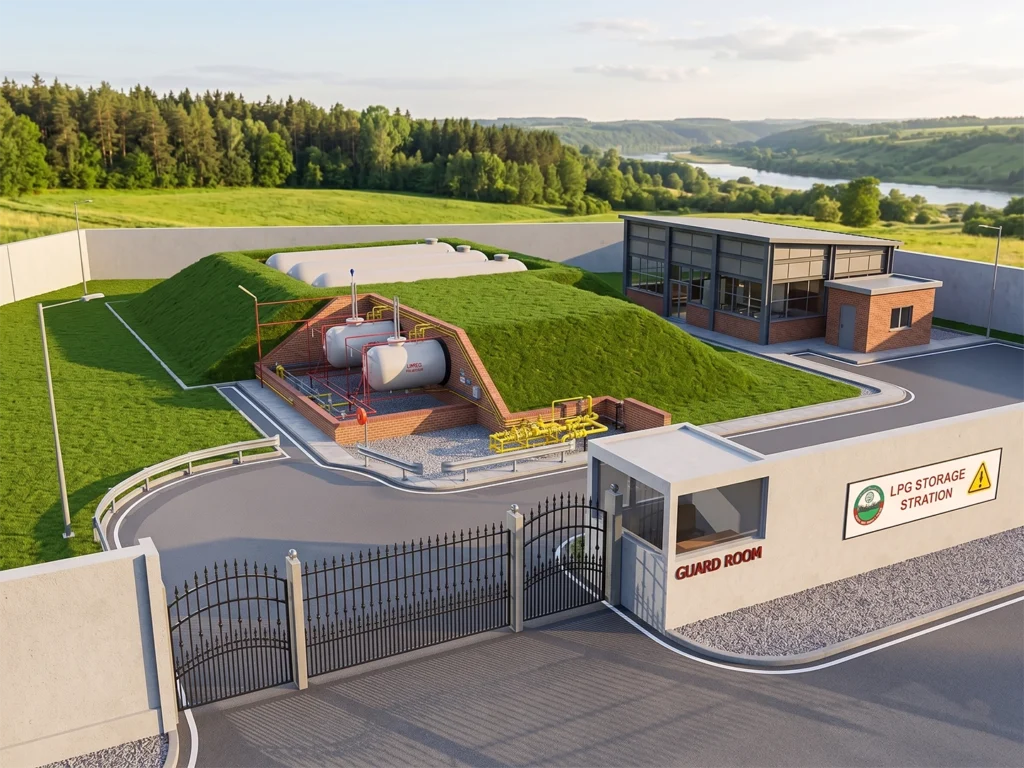
The facility is designed with an initial LPG supply capacity of 2,500 kg per hour, which is adequate to meet the projected peak demand of Trust Green City at full operation. Provision has been kept within the design to increase storage and vaporization capacity in the future to accommodate load growth and expansion of the township.
The project design also considers future energy flexibility, with provisions to integrate an SNG (Synthetic Natural Gas) system and to transition to natural gas supply if and when pipeline gas becomes available, with minimal modification to the existing infrastructure.
A looped underground pipeline network of approximately 15,613 meters is designed to maintain stable pressure and reliable supply across five distribution zones. The underground LPG distribution network is designed with a main pipeline design pressure of 20 psi. Regulating and Metering Stations (RMS) will be installed at different zones based on consumption patterns. For residential zones, the RMS will regulate pressure from 20 psi inlet to 10 psi outlet, while for commercial zones, the outlet pressure may be maintained at up to 15 psi, with full provision for pressure adjustment based on user demand and operational requirements.
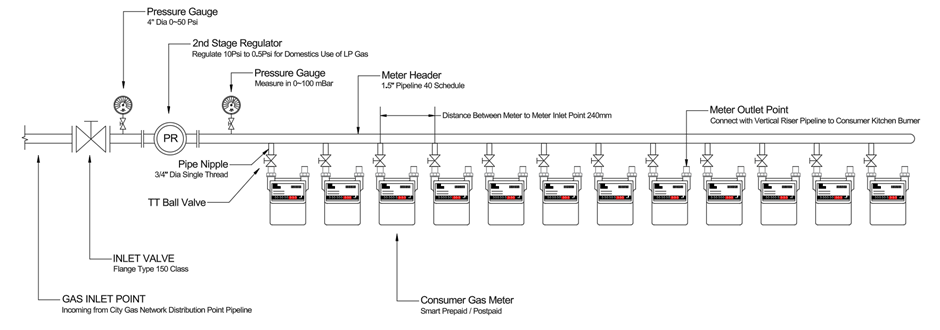
For residential users, smart gas meters will be installed, requiring an inlet pressure of 28–38 mbar. Each residential building will be equipped with a second-stage regulator, where the inlet pressure will be 10 psi and the outlet pressure will be reduced to approximately 0.5 psi (28–38 mbar) to ensure safe domestic usage.
The smart gas metering system will enable users to monitor real-time gas consumption, access historical usage data, and benefit from advanced safety features, including automatic shut-off during unattended cooking, gas leakage detection, and seismic safety protection that activates system shutdown during earthquakes exceeding magnitude 4. This smart metering infrastructure ensures enhanced safety, operational transparency, and modern user convenience.
Overall, the Centralized LPG Storage and Gas Supply Facility for Trust Green City represents a safe, scalable, and future-ready energy solution, delivering modern utility services aligned with international standards and the long-term sustainability vision of the project.
Demand Assessment and Load Calculation
The demand assessment for the proposed centralized LPG reticulation system of Trust Green City (TGC) has been carried out based on projected full-capacity population and standard per capita energy consumption benchmarks.
- Population Basis
- Projected population at 100% space utilization: 54,552 residents
Per Capita Energy Consumption
- Daily per capita energy consumption: 13 MJ per person
Total Daily Energy Requirement
Total daily fuel energy requirements: 709,176 Mj
Accordingly, the total projected daily energy demand of the township at full occupancy is: 709,176 MJ per day
Equivalent Fuel Requirement
Based on standard calorific values:
- 1 kg of LPG ≈ 50 MJ
- 1 m³ of Natural Gas ≈ 36 MJ
Therefore,
Equivalent LPG Requirement:
Daily Required LPG: 14,184 Kg /day
Equivalent Natural Gas Requirement:
Daily Required NG: 19,700 m3/day
Thus, the total projected daily demand corresponds to:
14,184 kg of LPG per day, or 19,700 m³ of Natural Gas per day
Particulars of LPG Storage facility:
Daily Demand Calculations
| S/N | Particulars | Unit | Amount |
| 1 | Total residents | Person | 54,552.00 |
| 2 | Daily required energy for cooking | Mj | 13 |
| 3 | Total Energy Required daily | Mj | 709,176.00 |
| 4 | 1 KG LPG equivalent energy | Mj | 50.00 |
| 5 | Required LPG for the project per day | Kg | 14,183.52 |
| 6 | Consider Cooking hour | Hour | 8.00 |
| 7 | Hourly Required LPG | Kg | 1,772.94 |
Project space utilization and percentages of living inhabitants VS LPG Demand
| Sl. No. | Percentages of Utilization | Daily Required LPG (KG) | Monthly Required LPG (Kg) | Hourly Required LPG (KG) |
| 1 | 100% | 14,183.52 | 425,505.60 | 1,772.94 |
| 2 | 80% | 11,346.82 | 340,404.48 | 1,418.35 |
| 3 | 60% | 8,510.11 | 255,303.36 | 1,063.76 |
| 4 | 50% | 7,091.76 | 212,752.80 | 886.47 |
| 5 | 40% | 5,673.41 | 170,202.24 | 709.18 |
| 6 | 25% | 3,545.88 | 106,376.40 | 443.24 |
| 7 | 15% | 2,127.53 | 63,825.84 | 265.94 |
| 8 | 10% | 1,418.35 | 42,550.56 | 177.29 |
| 9 | 5% | 709.18 | 21,275.28 | 88.65 |
Centralized LPG Reticulation System
Due to the suspension of new residential gas connections by Titas Gas Transmission and Distribution Company Limited, Trust Green City (TGC) has adopted a centralized LPG reticulation system as the primary fuel supply infrastructure for the township.
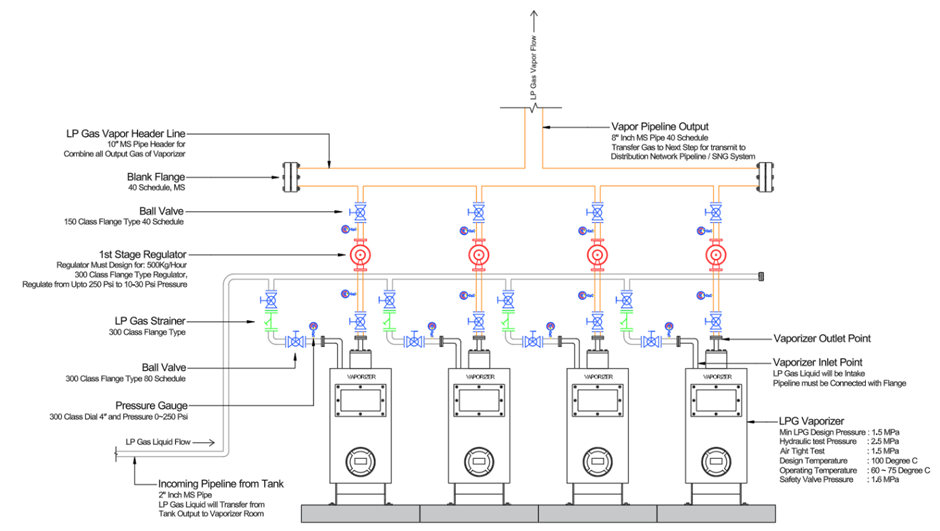
The “heart” of the system is a centralized storage facility designed to ensure a reliable gas supply to every house connection, even those at the farthest ends of the project area, The storage capacity is calculated based on a per capita daily energy consumption of 13 Mj, resulting in a total daily requirement of 14,184 kg of LPG. To meet this demand, the layout includes four 47m3 to 49 m3 LPG storage tanks. The plant utilizes five 500 kg/hr vaporizers to convert liquid LPG into its gaseous state for downstream distribution.
In addition to the LPG reticulation network, the system design incorporates a Synthetic Natural Gas (SNG) facility to ensure future operational flexibility. The SNG system enables blending of vaporized LPG with air to produce a gas mixture comparable to natural gas. This provision allows TGC to seamlessly transition to, or integrate with, natural gas supply if it becomes available in the future. Furthermore, in the event of LNG-based supply or national grid expansion, the SNG configuration provides adaptability and potential financial optimization by enabling hybrid operation modes. This approach ensures long-term sustainability and uninterrupted gas availability.
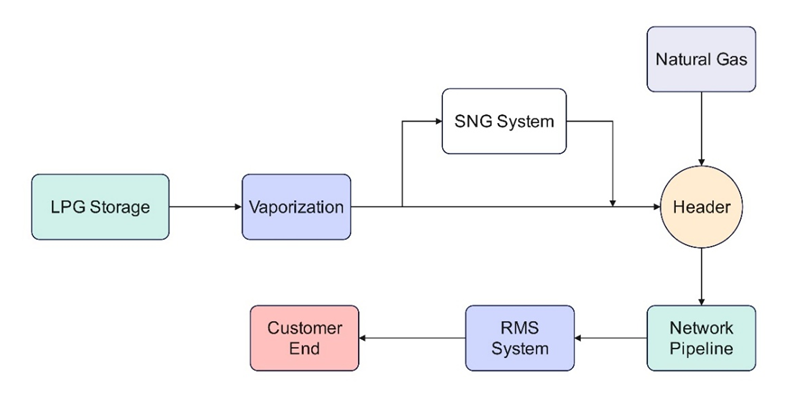
The centralized system offers the following advantages:
- Continuous and uninterrupted gas supply
- Elimination of household LPG cylinder storage and associated handling risks
- Centralized safety monitoring and operational control
- Improved fire safety and overall risk management
- Operational flexibility through SNG integration
The centralized supply header is engineered to deliver gas at 20 PSI, ensuring stable upstream pressure for effective downstream regulation through zone-wise RMS units and maintaining consistent service levels across residential and commercial areas.
Distribution Network and Zoning
The gas distribution network features an extensive underground pipeline system spanning a total length of 15,613.00 meters. This network is strategically organized into five distinct zones to ensure efficient management and pressure stability,
Division Wise Underground Pipeline Length
| Zone | Pipeline Length (meters) |
| Zone-01 | 1,767.00 |
| Zone-02 | 1,755.00 |
| Zone-03 | 720.00 |
| Zone-04 | 3,831.00 |
| Zone-05 | 7,540.00 |
Applicable Codes & Standards
List of system and the applicable code and standards that should follow to installation and designed for LPG Storage Facility, Underground Pipelines & Reticulated Gas System.
List of Code & Standards of Items
| S.N. | Item / System Component | Material / Manufacturing Standard | Design, Installation & Safety Codes |
| 1 | LPG Storage Tanks (Mounded / Under Ground) | ASTM A516 Gr 70 / ASTM A537 / EN material grades | ASME Section VIII Div 2, NFPA 58, EN 13445, Bangladesh LPG Rules 2004 and LPG Rules 2016 |
| 2 | LPG Storage Tank Inspection & NDT | ASME Section II (Materials) | NFPA 58 |
| 3 | Piping within LPG Storage & Handling Facility (Aboveground Plant Piping) | ASTM A106 Gr B / API 5L Grade B | ASME B31.3, NFPA 58, BNBC 2020 |
| 4 | Underground LPG Transmission / Distribution Pipelines | API 5L Grade B | ASME B31.8, NFPA 58, BNBC 2020 |
| 5 | Pipe Fittings (Elbows, Tees, Reducers) | ASTM A234 WPB | ASME B31.3 / B31.8, NFPA 58 |
| 6 | Valves (ESD, Ball, Globe, Check) | API 6D | NFPA 58 |
| 7 | Pressure Regulators & RMS Equipment | ASTM / EN Approved | NFPA 58 & Titas Gas Guidelines |
| 8 | Vaporizers (Water Bath) | Manufacturer Standard (ASME materials) | ASME Section VIII, NFPA 58 |
| 9 | LPG Pumps & Compressors | API 610 | NFPA 58, API Recommended Practices |
| 10 | Road Tanker Unloading System | ADR / DOT Approved Equipment | ADR, NFPA 58, Bangladesh LPG Rules |
| 11 | Cathodic Protection System | NACE / ISO Standards | NACE SP0169, ISO 15589 |
| 12 | Pipe Coating & Wrapping (Underground) | EN / ISO / AWWA | NFPA 58, BNBC 2020 |
| 13 | Gas Meters (Diaphragm Type) | OIML R137 / EN 1359 | NFPA 54, BNBC 2020 |
| 14 | Smart Gas Meter (Prepaid / AMI) | OIML / MID Certified | NFPA 54, BNBC 2020, BERC Guidelines |
| 15 | Leak Detection & Gas Detection System | EN / UL Listed | NFPA 58, NFPA 72 |
| 16 | Emergency Shutdown System (ESD) | SIL Rated Equipment | NFPA 58, IEC 61511 |
| 17 | Fire Protection System | UL / FM Approved | NFPA 58, NFPA 10 & NFPA 14 |
| 18 | Building Internal Gas Piping | ASTM A106 | BNBC 2020, NFPA 54, NFPA 58 |
Above-ground mounded type LPG Storage Tank
The storage system for Trust Green City (TGC) is designed to maintain a consistent energy supply for a projected population of 54,552 residents, requiring a total daily consumption of 14,184 kg of LPG. To ensure reliability, the facility utilizes four bulk storage tanks, each with a water capacity of 48m3 (48,000 liters), providing a total water capacity of 192,000 liters. The operational philosophy designates operational tanks and standby tanks to facilitate continuous supply during refills or maintenance.
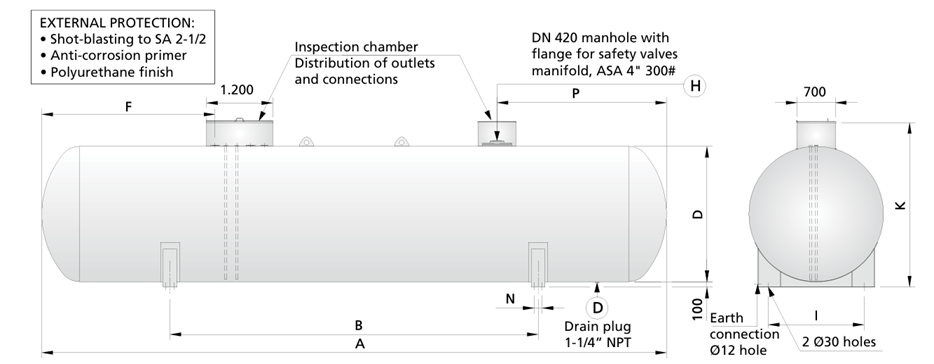
These vessels are specified as stationary bulk tanks designed and fabricated under ASME Section VIII, Division 2 or equivalent standards such as EN 13445. For TGC, the mounded type installation is the primary choice, where tanks are placed on concrete supports and covered with non-combustible material like sand. The tanks are engineered to a design pressure of 17.0kg/cm2 (g) and must undergo 100% radiography and mechanical testing at 26 bar.
LPG Vaporization System
The vaporization system serves as the essential technical bridge between the bulk storage tanks and the distribution network. Its primary function is to convert liquid LPG into a gaseous state by adding heat, ensuring that the supply pressure remains stable even when the natural evaporative capacity of the storage tanks is insufficient.
Regulating and Metering Station (RMS) System
The RMS (Regulating and Metering Station) acts as the primary hub for controlling and recording gas flow into major zones.
General Drawing Configurations of RMS
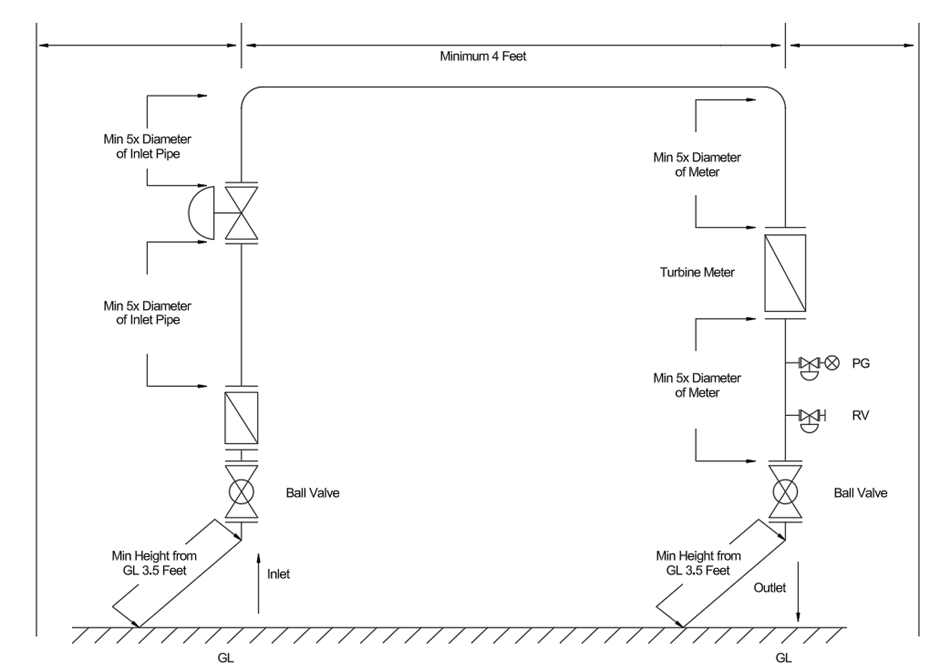
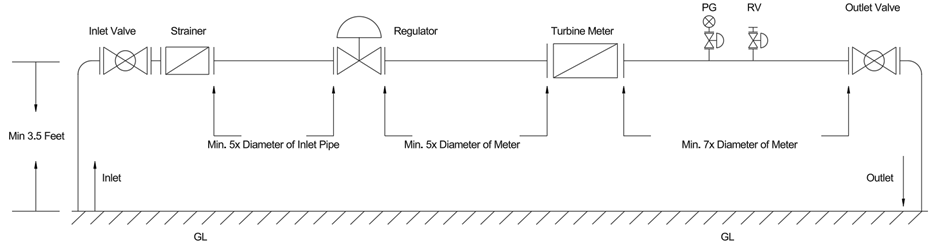
RMS drawings are primarily categorized into two installation types:
- U-Type Installation: Used when the meter and regulator are placed on separate parallel runs to save horizontal space.
- I-Type (In-Line) Installation: A straight-line arrangement where the components follow a single axis.
- Drawing Title & Legend: Every drawing must include a clear legend for components like pressure gauges, strainers, flange-type ball valves, and safety relief valves.
Road Crossing Arrangements
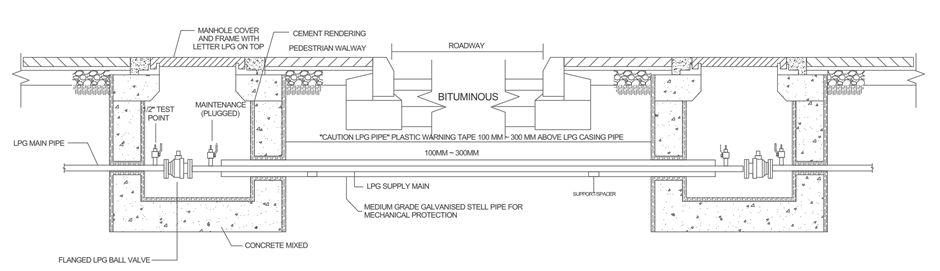
The road crossing arrangement for the LPG distribution network in Trust Green City (TGC) is designed to ensure maximum mechanical protection and operational safety, strictly adhering to NFPA 58 and the Bangladesh Explosives (LPG) Rules 2004.
Burial Depth and Mechanical Protection
- Standard Depth: Underground pipelines must be buried at a minimum depth of 0.8 meters (800 mm) below the grade of the carriage way/roadway.
- Casing Pipe: For road crossings subjected to vehicular traffic, the LPG main pipe must be installed inside a Medium Grade Galvanized Steel Casing Pipe. This casing serves as essential mechanical protection against weight and impact stresses from vehicles.
- Support and Spacing: Inside the casing, supports or spacers must be used to keep the internal MS (Mild Steel) pipe centered and stable.
Valve Stations and Sectional Isolation
- Isolation Pits: Both ends of an underground road crossing must be provided with isolating valves housed in reinforced concrete pits. These pits (such as MP-01 and MP-02) typically measure 1500 mm x 1500 mm with a depth of 1300 mm from Ground Level.
- Valve Types: Isolation is achieved using Flanged LPG Ball Valves that are readily accessible for maintenance, repair, or emergency shut-off.
- Test Points: Each pit must include a 1/2″ pressure testing point (plugged) to allow technicians to verify the integrity of the line segment before activation.
Safety, Identification, and Corrosion Control
- Warning Tape: A plastic warning tape marked with “CAUTION LPG PIPE” must be installed 100 mm to 300 mm above the casing pipe to alert future excavators.

- Tracer Wire: For non-metallic pipes (like PE or Polyamide), a tracer wire must be provided alongside the pipe to facilitate detection from the surface.
- Corrosion Protection: All underground metallic pipes and casings must be protected against corrosion using anti-corrosion wrapping tape or approved coatings.
- Manhole Marking: The concrete pits must be fitted with a manhole cover and frame, clearly cast with the letters “LPG or GAS” on top for immediate identification.
Network Pipeline to Household Connections
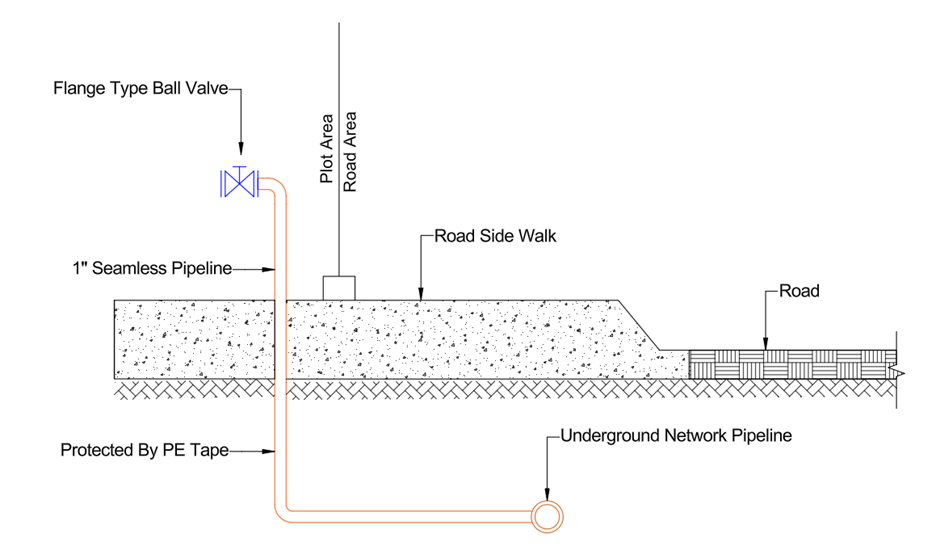
Each residential or commercial plot will be provided with a dedicated connection from the main network pipeline, terminating in a professional-grade flanged ball valve to allow for a seamless transition to the owner’s meter header. To ensure long-term durability and structural integrity, the pipeline will be meticulously wrapped with PE tape to provide superior corrosion protection against environmental wear.
Meter Header
The Meter Header acts as a central distribution manifold in residential and commercial LPG systems, serving as the interface between the primary distribution network and individual consumer meters. According to the Detailed Design Drawings for Trust Green City, the header is engineered to handle intermediate pressure and reduce it to safe, appliance-ready levels through a series of specific components and standardized layouts.
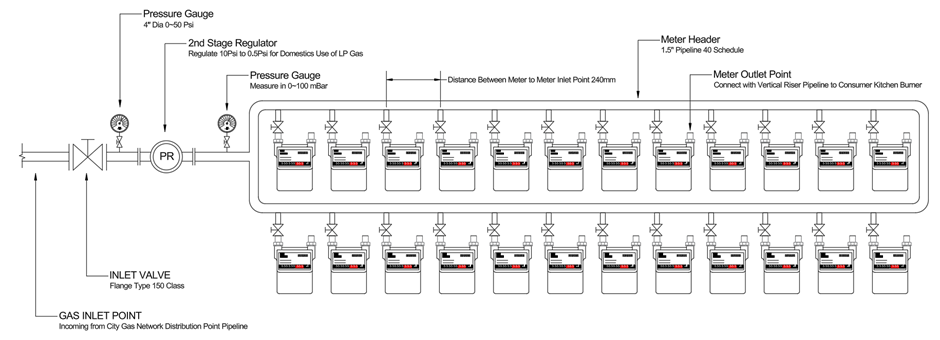
Technical Specifications and Standards
- Piping Material: The header is typically constructed using 1.5-inch Schedule 40 MS (Mild Steel/Carbon Steel) pipeline. For underground or riser connections leading into the header, ASTM A106 or ASTM A53 seamless steel pipes are required.
- Compliance Codes: All installations must adhere to NFPA 54 (National Fuel Gas Code), NFPA 58 (Liquefied Petroleum Gas Code), and the Bangladesh Explosives (LPG) Rules 2004.
- Color Coding: International standards require all internal LPG lines and meter headers to be color-coded Yellow for immediate safety identification.
2nd Stage Regulator Specification and Standards
A 2nd stage regulator reduces gas pressure from the 1st stage to a stable low pressure suitable for appliances.
Typical specs: LPG (Propane/Butane), inlet pressure about 0.5–4 bar, outlet pressure commonly 20–50 mbar (5–11″ WC), capacity as per load (kg/hr or BTU/hr), aluminum body with brass/stainless internals, threaded connections (¼″–½″ NPT).
Standards: EN 334 / EN 88, CE, UL / CSA (model dependent).
Well-known brands: Rego (USA), Fisher / Emerson, Marshall, ERG / ESKA (Europe).
Widely used in residential and commercial LPG distribution systems.
Regulatory Compliance
The establishment and operation of the centralized LPG reticulated system for Trust Green City (TGC) are subject to a comprehensive framework of national laws and international safety codes. Achieving full regulatory compliance is a mandatory prerequisite for system activation, ensuring that the infrastructure is engineered to safeguard public safety and the environment.
Approval Authorities
The system requires formal vetting and licensing from several key governmental and regulatory bodies:
- Department of Explosives: As the primary authority, the Chief Inspector of Explosives must approve all technical designs, including the code of construction for storage tanks (ASME Section VIII Div-2) and the layout of the 15,613-meter pipeline network. This authority is responsible for issuing the license for “LPG Storage and Use in Reticulated Systems” (Form ‘J’ or ‘K’ under the LPG Rules 2004). They must verify that tanks have undergone 100% radiography and mechanical pressure testing at 34 bar for 30 minutes before granting custom clearance and operational permits.
- Fire Service & Civil Defense: The facility must implement fire safety guidelines provided by this department, which often includes the training of on-site security guards in fire-fighting principles and procedures. The system must comply with BNBC 2020 Part 4 regarding fire protection and compartmentalization to mitigate the hazards of gas leaks.
- Local Authority (RAJUK/DNCC): All infrastructure must align with the Detailed Area Plan (DAP) for Dhaka City 2022–2035. This includes strict adherence to Floor Area Ratio (FAR) standards, land use zoning, and ensuring that utility corridors do not conflict with the DNCC masterplan for roads near the TGC project area.
- Utility Regulator (BERC): The Bangladesh Energy Regulatory Commission oversees the quality, pressure, and environmental safety of the gas supply. BERC ensures that the TGC authority follows principles of non-discrimination among consumers and maintains the Regulating and Metering Stations (RMS) in a manner prescribed by national law.
Mandatory Documentation for Compliance
To facilitate the approval process and ensure technical integrity, the following engineering deliverables must be submitted for review:
- Hydraulic Calculations: These reports document the pipeline sizing, load calculations, and pressure drop analysis. They ensure that the network can maintain a reliable vapor-phase distribution at a regulated downstream pressure (typically 20 PSI at the primary stage) even during peak demand periods.
- Tank Design Drawings: Detailed drawings must prove compliance with ASME Section VIII Division-2 or EN 13445. These include specifications for material grades (e.g., ASTM A516 Gr 70), total anti-corrosion coating thickness (450 microns), and the configuration of safety appurtenances like internal relief valves.
- Separation Distance Layout: This critical document maps the terminal area to confirm compliance with NFPA 58 and Bangladesh LPG Rules 2004. For the 40,000-liter mounded tanks, it must show a 15-meter safety radius separating the shell from buildings and a 1-meter minimum distance between adjacent tanks.
- Hazard Analysis: This involves an expert evaluation and quantification of on-site and off-site risks. It identifies credible accident scenarios, assesses the impact of potential leaks, and defines the hazardous area classifications (Class 1, Division 1 and 2) where only flameproof electrical fittings are permitted.
- Emergency Response Plan (ERP): The ERP must conform to the APELL process (Awareness and Preparedness for Emergencies at a Local Level). It provides a tiered sequence of actions for escalating events, coordinates communication with external emergency services, and outlines the role of internal response teams trained to act decisively to contain incidents before they escalate.
Great Project You have done. Congratualations
Thank you. Stay tuned